
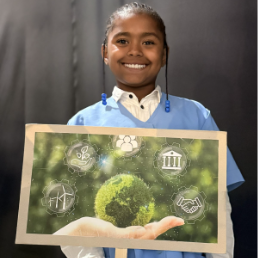
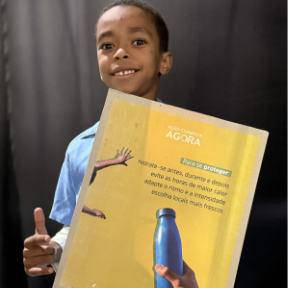
Throughout June, more than 700 pupils and 120 teachers are taking part in the activities of the 22nd edition of “June – Children’s Month”, organised by the Education Department of the municipality of Paúl, on the island of Santo Antão. This year, the initiative is dedicated to the theme “Today’s children, tomorrow’s climate guardians”, emphasising the importance of climate education from the earliest years of schooling.
The initiative is supported by the Climate Action Programme, which has been collaborating with the education sector on various fronts and across all the islands, including the distribution of thousands of copies of the Teacher’s and Climate Action Diary – the fourth edition of which is currently being finalised – the organisation of Climate Action Civic Week at the start of the school year, and the preparation of 36 teaching activity sheets for Years 1, 2, 3 and 4 of primary education, covering the subjects of Portuguese, Mathematics and Integrated Sciences.
According to Lineth Cruz, Paúl’s Education Officer, “the project enables children to learn about, value and prioritise actions capable of combating the impact of climate change through participation in sporting, recreational and cultural activities. In other words, we consider these activities to be strategic allies in sharing information, providing education, raising awareness and fostering understanding not only amongst pupils, but across the entire educational community. During the implementation of the activities, we encourage the inclusion of different perspectives on this reality – that is, an interdisciplinary approach – capable of demonstrating that the various sporting, recreational and cultural dimensions have an impact on the interpretation of information, on knowledge, on the perception of the problem and the risks, as well as on the ways in which we act and react.”
A gala to celebrate creativity and climate literacy
One of the highlights of the activities was the “Climate Guardians Gala”, held on 7 June at the Bunzim Multipurpose Centre, Cidade das Pombas, in the municipality of Paúl. For over three hours, the venue hosted a cultural programme dedicated to climate action, featuring theatre, dance, music and poetry recitals.
The gala brought together the entire educational community, including pupils from different stages of education, teachers, parents, guardians, family members and representatives from various organisations. The venue was packed throughout Sunday afternoon, with an estimated attendance of over one thousand five hundred people.
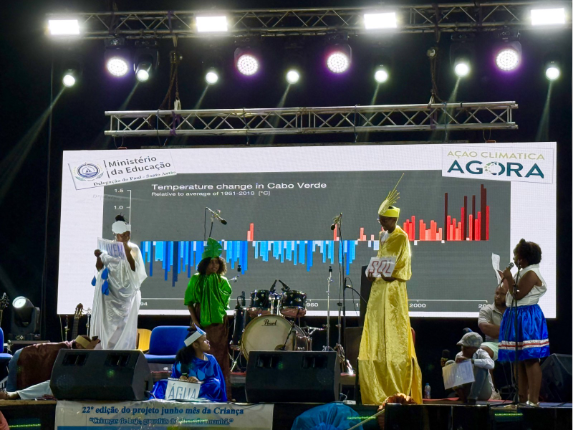
Through art and cultural expression, the children conveyed powerful messages about protecting the planet, reminding us that “protecting the climate means protecting the life that exists in every corner of the planet”, that “the future of the planet begins with the choices we make now” and that “when we look after the climate, we look after our home”.
Nelson Soares David, teacher and coordinator of Secondary Education, described the Gala as “an excellent way of elevating and promoting culture and raising climate awareness within our educational community”.
More than just a cultural event, the gala demonstrated how the school can be a prime setting for transforming knowledge into awareness, and awareness into action.
Teachers trained to bring climate action into the classroom
As part of Children’s Month activities, a training session on the fundamentals of climate action was also held for 30 primary school teachers.
The session provided an opportunity to explore key concepts relating to climate change, adaptation, mitigation, local impacts and the role of schools in promoting more sustainable behaviours. By strengthening teachers’ knowledge, the initiative helps ensure that climate action is addressed in a more practical, integrated way that is closer to pupils’ everyday lives.
This activity complements the work that the Climate Action Programme has been carrying out in the education sector, notably through the production of teaching materials and support for the integration of climate literacy into school practices.
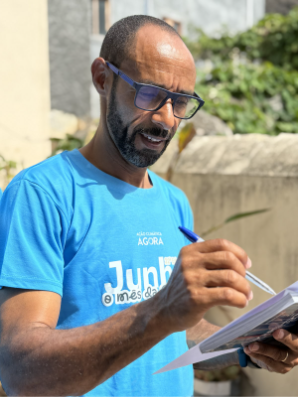
João Delgado, Primary Cycle Coordinator and one of the organisers of the ‘June, Children’s Month’ project, notes that:
“During late May and throughout June, I would like to emphasise that the education sector in the municipality of Paul has been, and continues to be, involved in organising various activities, with a focus on measures to tackle the consequences of climate change.
Under the slogan ‘Today’s children, tomorrow’s climate guardians’, a fair number of teachers, including myself, also benefited from a training session on this very topic, which is particularly relevant in the current context, marked by the growing need to promote education for sustainability and to strengthen the capacity of educational communities to respond to the challenges of climate change.
By providing teachers with up-to-date scientific knowledge, innovative methodologies and appropriate teaching strategies, this initiative helps to strengthen our professional skills and to integrate environmental issues across the board into teaching and learning processes.
Through these actions, it is possible to recognise the school as a prime setting for shaping conscientious and socially responsible citizens, and that our role as teachers and agents of change is crucial in promoting a culture of sustainability and climate responsibility.
Through our educational work, we teachers play a fundamental role in raising children’s awareness of climate issues, encouraging the development of critical thinking, ecological awareness and active participation in the search for solutions to contemporary environmental challenges.“
Parents and carers also join the conversation on climate
Pioneering and innovative in nature, the programme also included a question-and-answer session on climate action aimed at parents and carers. The activity was based on the manifesto resulting from the extraordinary session of the Children’s and Young People’s Parliament on children’s rights and climate change, bringing the concerns expressed by the children closer to their families and the wider community.
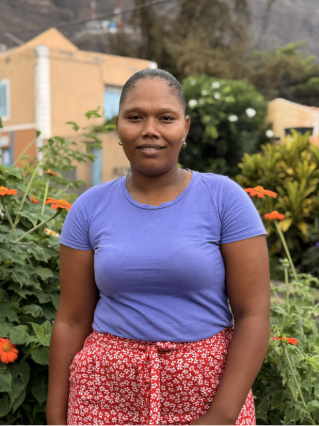
For Lucélia, a nursery teacher in charge of a group of 20 babies up to one year old, and a mother of two children – a 12-year-old girl and an eight-year-old boy with severe allergies – the session had an immediate impact:
“I learnt things I didn’t know before. At nursery, as a childcare worker, I’ll talk to my colleagues and we’ll be more mindful of the heat and its effect on the children. We’ll be taking greater care from now on. As a mother, I have a son with many allergies. Heatstroke and the more intense heat caused by climate change can worsen his condition. Now I’ll be even more vigilant and take much greater care to protect him.”
The session provided a space for direct dialogue on the impacts of climate change on everyday life, including issues relating to health, food, water, extreme heat and child protection. This approach reinforces the idea that climate action is not confined to school: it begins at home, continues in the community and must involve all generations.
Educating today to protect tomorrow’s climate
The 22nd edition of ‘June – Children’s Month’ at Paúl demonstrates that climate education can be delivered in a participatory, creative and community-focused way. By involving pupils, teachers, parents, carers and institutions, the initiative reinforces the role of children as agents of change and future guardians of the climate.
With the support of the Climate Action Programme, these activities help to consolidate a culture of climate literacy within the education system, promoting knowledge, responsibility and participation from the earliest years of schooling.
Because protecting the climate also means protecting children, health, education and the future of Cabo Verde.