
Between March 2nd and 4th, 2026, the island of Boa Vista hosted the first edition of the Youth Forum for Climate Action (FoJAC), an initiative promoted by the Institute of Sport and Youth (IDJ) and the Climate Action Program (PAC), implemented by LuxDev, with the aim of strengthening climate literacy, civic participation, and youth leadership in responding to the challenges of climate change in Cabo Verde.
The Forum brought together 44 young people from different islands and municipalities of the country, including community leaders, representatives of youth organizations, university students, climate activists, and municipal technicians linked to the areas of youth and climate. For three days, Boa Vista was transformed into a space for learning, sharing experiences, and building solutions for one of the greatest challenges of our time.
In a context where Cabo Verde faces increasing challenges related to water scarcity, coastal erosion, rising temperatures, extreme weather events, and pressure on natural resources, investing in youth empowerment means investing in building a more resilient future. This vision guided the FoJAC (Cape Verde Youth Forum).
Throughout the Forum, participants had the opportunity to deepen their knowledge of the main climate risks affecting the country, as well as national climate governance instruments, including Nationally Determined Contributions (NDCs), the National Adaptation Plan (NAP), and other mechanisms that guide climate action in Cabo Verde.
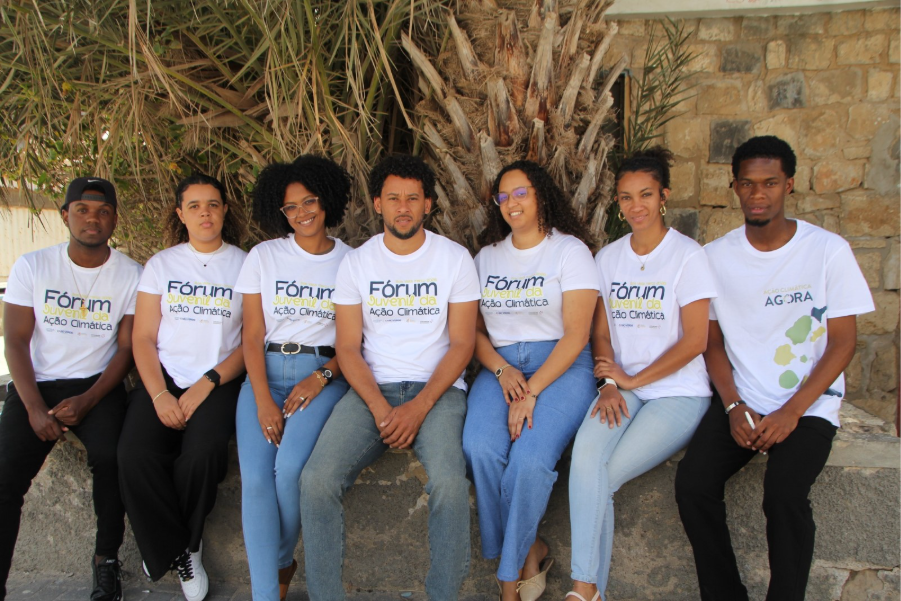
More than a conventional training program, FoJAC invested in a practical and participatory approach. Through thematic workshops, group dynamics, interactive digital tools, and mentoring sessions, young people were challenged to identify existing climate problems in their territories and develop concrete proposals for solutions. The goal was not only to transmit knowledge but also to create conditions for participants to become active agents of change in their communities.
One of the most enriching moments of the Forum was the work developed in groups to create small climate projects. Starting from real challenges identified by the participants themselves, intervention proposals were built focusing on adaptation to climate change, community awareness, environmental protection, and the promotion of sustainable practices. This exercise allowed knowledge to be transformed into action and demonstrated the capacity of Cabo Verdean youth to develop innovative solutions when given the right tools.
The Forum’s location on Boa Vista Island also brought an important practical and territorial component. The visit to the Sal Rei salt pans allowed participants to directly observe a space of high ecological, historical, and cultural value, while reflecting on the impacts of climate change on coastal ecosystems and the potential of Nature-Based Solutions to strengthen local climate resilience.
For the Climate Action Programme, this activity represents an important step in achieving the objectives defined within the framework of climate governance and citizen participation. The FoJAC not only strengthened the capacities of the young participants but also contributed to the creation of a national network of youth committed to climate action, capable of disseminating knowledge, mobilizing communities, and positively influencing local development processes.
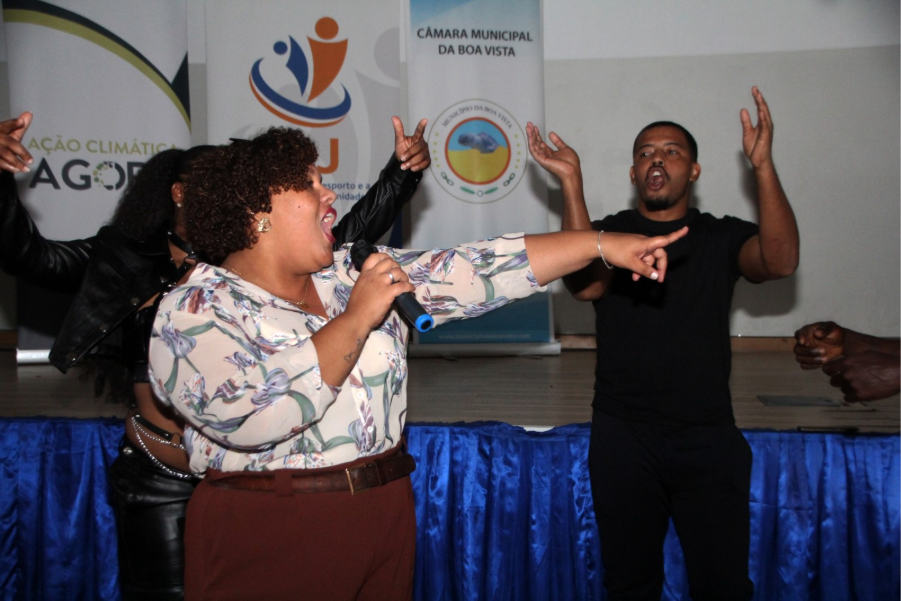
The Forum also provided a privileged space to promote dialogue between young people, public institutions, and development partners, reinforcing the importance of youth participation in building the country’s climate policies and solutions. At a time when Cabo Verde seeks to accelerate the implementation of its climate commitments, the inclusion of youth in decision-making processes becomes increasingly essential.
One of the main messages that emerged throughout the meeting was clear: young people should not be seen merely as beneficiaries of climate policies, but as strategic partners in their implementation. They are the ones who will live with the future impacts of the decisions made today and, therefore, should occupy a central place in building solutions.
The first edition of FoJAC demonstrated that there is a conscious, motivated, and prepared young generation in Cape Verde ready to assume a leadership role in climate action. The challenge now is to maintain this momentum, support the initiatives that emerged during the Forum, and continue creating opportunities for young people to transform ideas into concrete actions.
More than an event, FoJAC was the beginning of a community of young people committed to the country’s climate future. A community that believes climate action begins locally, but whose impact can be felt throughout Cabo Verde.