
How the Climate Action Programme supported the national delegation and strengthened the country’s presence in Belém do Pará
With only 0.002% of global emissions, Cabo Verde played an active role at COP30, held from 10 to 21 November 2025 in Belém do Pará, Brazil. The participation was strategically supported by the Climate Action Programme, implemented by LuxDev, amplifying the country’s voice and influence in debates on climate finance, adaptation, and transparency, and enabling participation in several side events.

The Role of the Climate Action Programme
The Climate Action Programme provided technical and financial support for the participation of Cabo Verde’s Government delegation at COP30, covering logistics, production of materials in English, and organization of side events. This intervention strengthened the country’s ability to present innovative solutions and position itself as a reference among Small Island Developing States (SIDS).

Side Events and Impact
During COP30, Cabo Verde organized two flagship events at the Luxembourg Pavilion:
- Counting What Matters: Cabo Verde’s Climate Budgeting for Resilient SIDS Futures, and
- Cabo Verde’s Climate Compass: Navigating Adaptation Across Institutions, Knowledge, and Communities.

These events showcased concrete data, such as climate tagging of about 10% of the national budget (52% mitigation, 35% adaptation, 13% both), demonstrating transparency and credibility for accessing international finance and linking this process to the implementation of the National Adaptation Plan (NAP).
Speakers included:
- Alexandre Nevsky Rodrigues, National Secretary for Climate Action, Ministry of Agriculture and Environment of Cabo Verde;
- Claudia Hitaj, Climate Adviser at Luxembourg’s Ministry of Environment, Climate and Biodiversity and Vice-President of the Luxembourg Sustainable Finance Initiative (LSFI);
- Rito Évora, National Director of Industry, Trade and Energy, Ministry of Industry, Trade and Energy, Cabo Verde; and
- Tânia Romualdo, Permanent Representative of Cabo Verde to the United Nations.
The session was moderated by Inês Mourão, Coordinator of the Climate Action Programme at LuxDev Cabo Verde.
The discussion focused on the application of Climate Budget Tagging (CBT) to the 2026 State Budget, revealing that 10% of public expenditure is climate-related, distributed among mitigation (52%), adaptation (35%), and combined actions (13%). Strategies to expand CBT to all sectors and municipal budgets were discussed, reinforcing transparency and the ability to mobilize climate finance.

Voice of Cabo Verdean Diplomacy
COP30 strengthened global commitments on climate finance, adaptation, and transparency. Measures were adopted to accelerate the implementation of the Paris Agreement, with emphasis on support mechanisms for SIDS and least developed countries. Cabo Verde stood out for its innovative approach to climate governance and its advocacy for integrating climate action across all sectors, being invited to numerous side events.
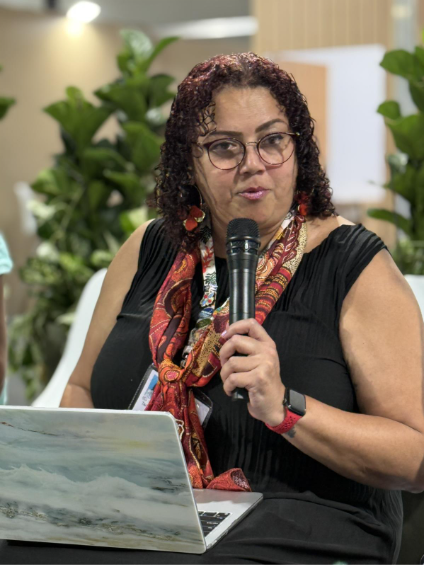
“Cabo Verde turns vulnerability into vision, showing that small states can lead with boldness and innovation.” — Tânia Romualdo, Ambassador of Cabo Verde to the UN.
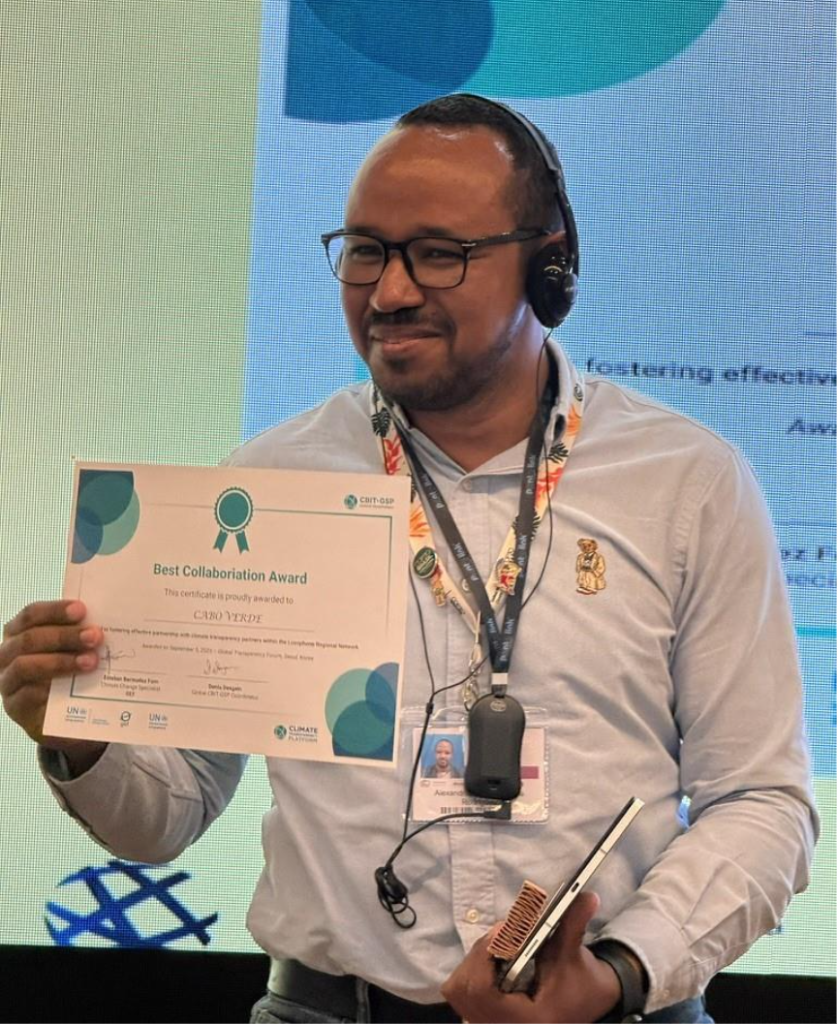
Cabo Verde was also recognized with the award for best collaborator under the Capacity-Building Initiative for Transparency (CBIT).
Through the Climate Action Programme, Cabo Verde has been supported in defining and implementing the National Climate Transparency System and preparing its first Biennial Transparency Report.
Thus, Cabo Verde demonstrates that it is possible to lead through transparency and integration of climate action into budget planning, positioning itself as an example for other SIDS in climate tagging and NAP implementation. To consolidate this leadership, the country can explore new partnerships with Luxembourg initiatives, such as the Luxembourg Sustainable Finance Initiative (LSFI), which promotes sustainable investments and can support resource mobilization for resilient climate actions.

Detailed COP30 Outcomes
According to the summary prepared by the Earth Negotiations Bulletin2, COP30 took place in a critical context: 2024 was confirmed as the hottest year on record, about 1.55°C above pre-industrial levels. The Nationally Determined Contributions (NDCs) presented fell short of the Paris Agreement targets, revealing a concerning gap in global ambition.
Key outcomes included the adoption of the “Mutirão” decision, aimed at accelerating Paris Agreement implementation, including consultations on climate finance (Article 9.1), trade measures, and strategies to close the 1.5°C gap. However, proposals to include explicit references to the phase-out of fossil fuels and reversal of deforestation were not approved, despite broad support.
Another milestone was the approval of the Global Goal on Adaptation (GGA), surrounded by controversy: the final indicators erased two years of technical work, generating protests from several delegations.
Despite tensions, positive advances included the adoption of a new gender action plan, creation of a just transition mechanism, and designation of the next COP hosts: Turkey (COP31) and Ethiopia (COP32).
The closing session was marked by turmoil and ignored points of order, raising questions about transparency and legitimacy of the process. Still, COP30 reinforced the urgency of accelerating climate action and ensuring greater support for the most vulnerable countries, including SIDS.