
Climate action in higher education in Cape Verde: institutional and student impacts of the partnership between the University of Cape Verde and LuxDev.
Abstract
Climate change represents one of the major contemporary global challenges, with particularly severe impacts on Small Island Developing States, such as Cape Verde. This article analyses the project Climate Action in Higher Education: Sowing Environmental Awareness, implemented by the University of Cape Verde (UniCV) in partnership with Luxembourg Cooperation, through Lux-Development S.A. (LuxDev), during the period 2024–2025. The objective of the study is to describe the main goals of the project, analyse the strategic relevance of the UniCV–LuxDev partnership, and discuss the institutional and student impacts resulting from its implementation. The methodology is based on documentary analysis of the Project Final Report and the Diagnosis on Climate Literacy at UniCV. The results demonstrate a significant strengthening of climate literacy, institutional capacity for environmental risk management, and student engagement through participatory methodologies and peer education. The study concludes that the structured integration of climate action into higher education constitutes a key driver for sustainable development and for the education of critical citizens committed to climate resilience.
Keywords: climate action; higher education; climate literacy; Cape Verde; international cooperation.
Introduction
Climate change represents a systemic challenge affecting environmental, social, and economic dimensions, requiring integrated and sustained responses. In island countries such as Cape Verde, characterised by high climate vulnerability, institutional capacity-building and human resource development play a strategic role. In this context, higher education institutions are called upon to assume a central role in knowledge production, civic education, and the promotion of sustainable practices.
The project Climate Action in Higher Education: Sowing Environmental Awareness was developed within the framework of the Climate Action Programme CVE/401, funded by the Government of the Grand Duchy of Luxembourg and implemented by the University of Cape Verde in partnership with LuxDev. The project is aligned with national and international strategic instruments, including Cape Verde’s Nationally Determined Contribution (2021), the National Adaptation Plan (2022), and the National Development Strategy Ambition 2030.
This article aims to analyse the project’s contributions to strengthening UniCV’s institutional capacity, promoting climate literacy, and enhancing student engagement, highlighting the relevance of the UniCV–LuxDev partnership in consolidating climate action within Cape Verdean higher education.
2. Project framework and objectives
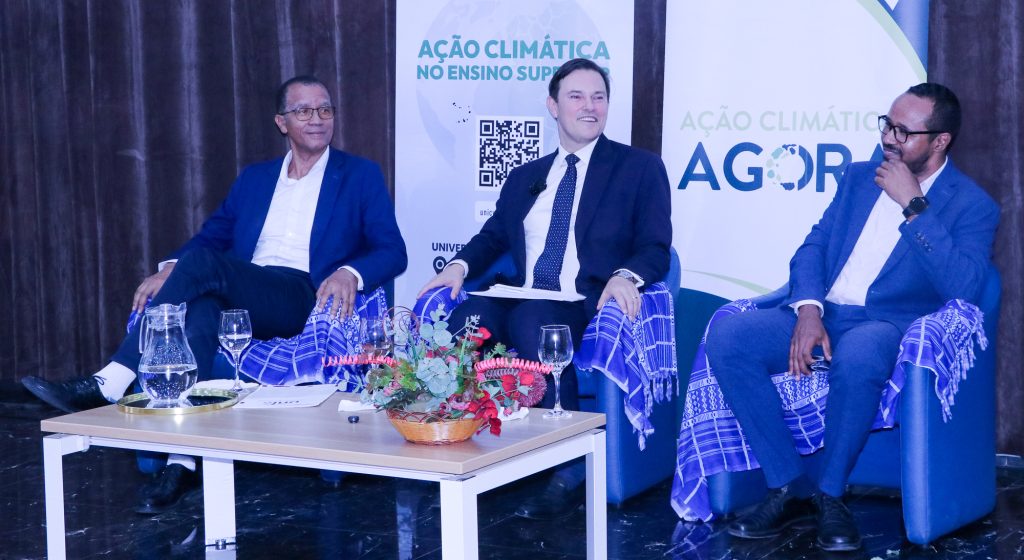
The project was designed with the purpose of strengthening UniCV’s capacity to respond to climate change challenges by promoting scientific knowledge, behavioural change, and community engagement. With a budget of EUR 75,000 and a duration of 12 months, the initiative was structured around three main pillars: (i) training and awareness-raising within the university community; (ii) production of scientific knowledge and university outreach; and (iii) strengthening the university’s internal capacity for climate risk management. Specific objectives included increasing students’ climate literacy, training educators and climate ambassadors, producing innovative educational materials, and developing institutional tools, such as the UniCV Contingency Plan for environmental risk situations.
3. The UniCV–LuxDev partnership as a strategic factor
The partnership between the University of Cape Verde and LuxDev proved to be decisive in achieving the project’s objectives. Beyond financial support, Luxembourg cooperation contributed a results-oriented approach, methodological rigour, and alignment with international standards for climate action and education for sustainable development. This collaboration strengthened UniCV’s role as a strategic actor in the implementation of national climate policies, reinforcing higher education as a space for articulation between science, public policy, and society. The partnership also enabled the consolidation of planning, monitoring, and evaluation practices, generating lasting impacts on university governance.
The analysis presented in this article is based on a documentary analysis methodology applied to two central project instruments: the Final Report of the Climate Action in Higher Education Project and the Diagnosis on Climate Literacy at the University of Cape Verde. These documents allow for an integrated reading of the activities implemented, the results achieved, and the impacts observed.
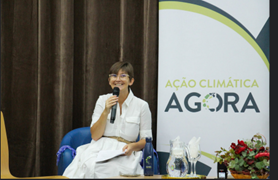
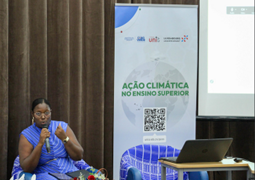
Among the main actions, the Climate Action for Beginners in Higher Education short course stands out. It was structured around three thematic modules: (i) Concepts, Relevance, and Practical Actions; (ii) Policies and Management Instruments for Climate Change; and (iii) Global Advocacy for Climate Action. The short course adopted active and participatory methodologies, prioritising peer learning, interactive dynamics, educational games, and activities of critical reflection.
In addition, the project incorporated thematic workshops, climate olympiads, awareness-raising campaigns, the production of a Climate Glossary in the Cape Verdean language, and the development of the UniCV Contingency Plan, strengthening the articulation between teaching, research, and university outreach.
4. Institutional and student community impacts
The impacts of the project were observed at both the institutional level and within the student community. Institutionally, UniCV strengthened its capacity to integrate climate action into its core missions, consolidating its position as a national reference in climate education within higher education. The development of strategic and pedagogical tools contributed to the sustainability of actions beyond the project’s implementation period.
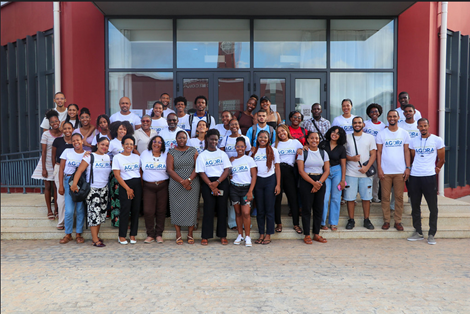
Among the main actions implemented, particular emphasis was placed on the short course Climate Action for Beginners in Higher Education, structured around three thematic modules: (i) Concepts, Relevance, and Practical Actions; (ii) Climate Change Policies and Management Instruments; and (iii) Global Advocacy for Climate Action. The course adopted active and participatory methodologies, prioritising peer learning, interactive dynamics, educational games, and critical reflection activities.
In addition, the project incorporated thematic workshops, climate olympiads, awareness-raising campaigns, the production of a Climate Glossary in the Cape Verdean Language, and the development of the UniCV Contingency Plan, thereby strengthening the articulation between teaching, research, and university outreach.
Final considerations
The project Climate Action in Higher Education: Sowing Environmental Awareness demonstrated that the structured integration of climate action into higher education is essential to addressing contemporary environmental challenges, particularly in vulnerable island contexts. The partnership between UniCV and LuxDev constituted a key element in the success of the initiative, enabling lasting impacts at the institutional, pedagogical, and community levels.
By promoting climate literacy, student engagement, and institutional strengthening, the project contributed to positioning the University of Cape Verde as a central actor in advancing sustainable development and climate resilience, reaffirming the strategic role of higher education in social and environmental transformation.
References
Universidade de Cabo Verde. (2025). Relatório final do projeto Ação Climática no Ensino Superior: Semeando a Consciência Ambiental. Praia: UniCV.
Universidade de Cabo Verde. (2025). Diagnóstico sobre a literacia climática na Universidade de Cabo Verde. Praia: UniCV.
Lux-Development S.A. (2021). Programa de Ação Climática CVE/401. Luxemburgo: LuxDev.
Link to the project photos
Uni-CV abre workshop do Projeto Ação Climática com parceiros institucionais | Flickr