
As a Small Island Developing State (SIDS), Cape Verde faces significant climate challenges and is among the countries most vulnerable to the impacts of climate change. In 2025, this vulnerability became even more apparent. In August, the island of São Vicente was severely affected by Storm Erin, and in November, the interior of the island of Santiago was hit by torrential rains that caused serious damage to municipalities in the north of the island.
These events had significant impacts and reinforced an inescapable reality: the urgent need to strengthen institutional and community capacities to prevent, respond to and adapt to extreme weather events. Against this backdrop, how is Cabo Verde strengthening its national and local climate governance and action framework? The answer lies in two complementary, structural projects, funded by the GCF and implemented by LuxDev: CVE/802 ‘Strengthening the Climate Governance Framework’ and CVE/803 ‘Climate Action Planning in Cape Verde at Local Level’.
And how will the new GCF-funded projects benefit the country and its communities?
The two projects aim to provide an integrated response to the country’s climate vulnerabilities, taking action at both the national institutional level and the local level within decentralised municipal structures. With durations of 18 and 24 months respectively, the projects will complement the actions already underway under the CVE 401 Programme – Climate Action Now.
Project CVE/802 – Strengthening the Climate Governance Framework – aims to enhance Cabo Verde’s climate resilience through a robust, inclusive and effective climate governance framework. But how will it benefit the country and its communities? The project focuses on strengthening the structural and human capacity of national climate action through:
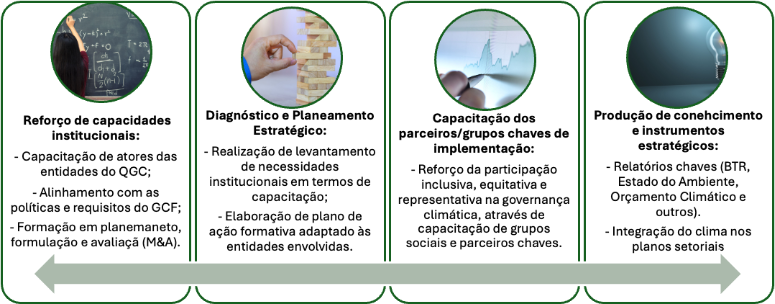
For its part, Project CVE/803 – Local-Level Climate Action Planning – aims to strengthen climate planning in all municipalities across Cabo Verde, ensuring that climate action reaches the level closest to the people. In a country highly exposed to climate risks, the local level is crucial.
The project’s intervention logic is structured around four outcomes aimed at helping to address gaps in the local climate governance system, through the collection of data and information to support decision-making, and strategies involving the private sector, with the aim of increasing opportunities for climate finance at the local level.
To this end, the project will:
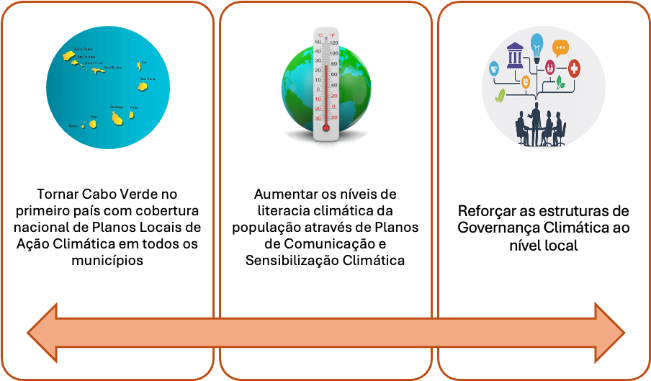
And how do the two projects complement each other? Their complementarity stems from their different levels of action – national (governance and policy) and local (planning and awareness-raising) – which together contribute to building a more coherent, inclusive, evidence-based and results-oriented climate system.
In this regard, given that “Climate Action is Now”, strengthening climate governance and planning is essential to protect Cabo Verde’s future and ensure more resilient communities. So, keep checking the Climate Portal for the latest updates on the implementation and real-world impacts of the actions taken under these two projects.
Mariana Alvares e Anilsa Gonçalves